7 Signs Your Dog Is Becoming Overwhelmed on a Walk

Barking and lunging are easy to notice. But by the time they happen, your dog has usually been telling you something for a while already. Learning to read the earlier signals gives you far more time to act — often enough to avoid the reaction altogether.
A note before the list: no single signal, on its own, tells you for certain what a dog is feeling. Context matters. These are signals worth noticing together, not a checklist to diagnose from one photo.
1. A sudden freeze
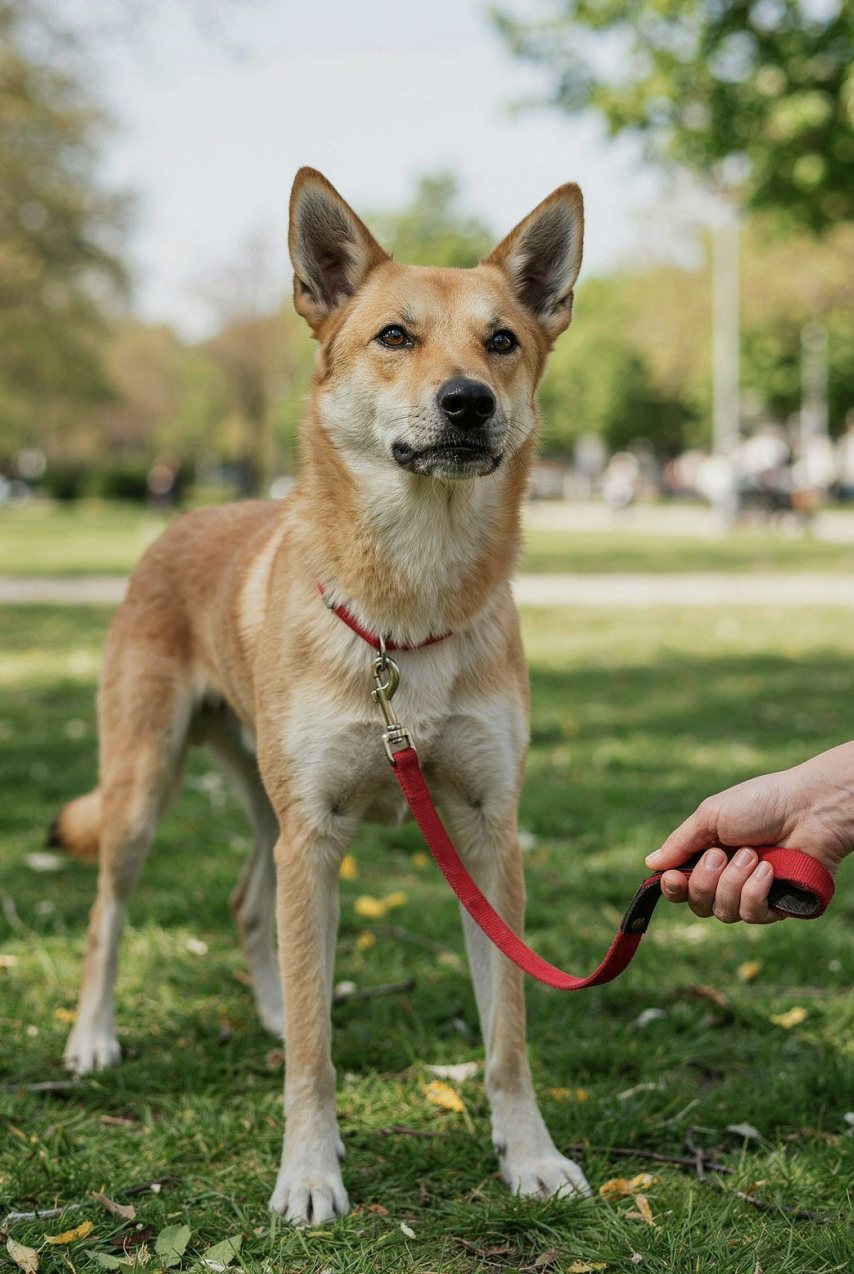
A dog that stops moving and goes very still — often with a hard stare toward the trigger — is usually not relaxed. Stillness before a reaction is one of the most reliable early warnings.
2. Closed mouth after panting
If your dog was panting and their mouth suddenly closes, that shift can signal rising tension, especially alongside other signs on this list.
3. Ears pinned back or unusually forward
Ears held flat against the head often signal discomfort or fear. Ears pushed hard forward can signal high arousal or fixation. Either extreme is worth paying attention to.
4. Weight shifted backward
A dog leaning their weight back, away from a trigger, while still facing it, is often trying to increase distance without fully turning away.
5. A tucked or stiffly raised tail
A tail tucked low can indicate fear. A tail held high and rigid, barely moving, can indicate high arousal. A loose, relaxed wag is a different picture from either.
6. Fixated staring
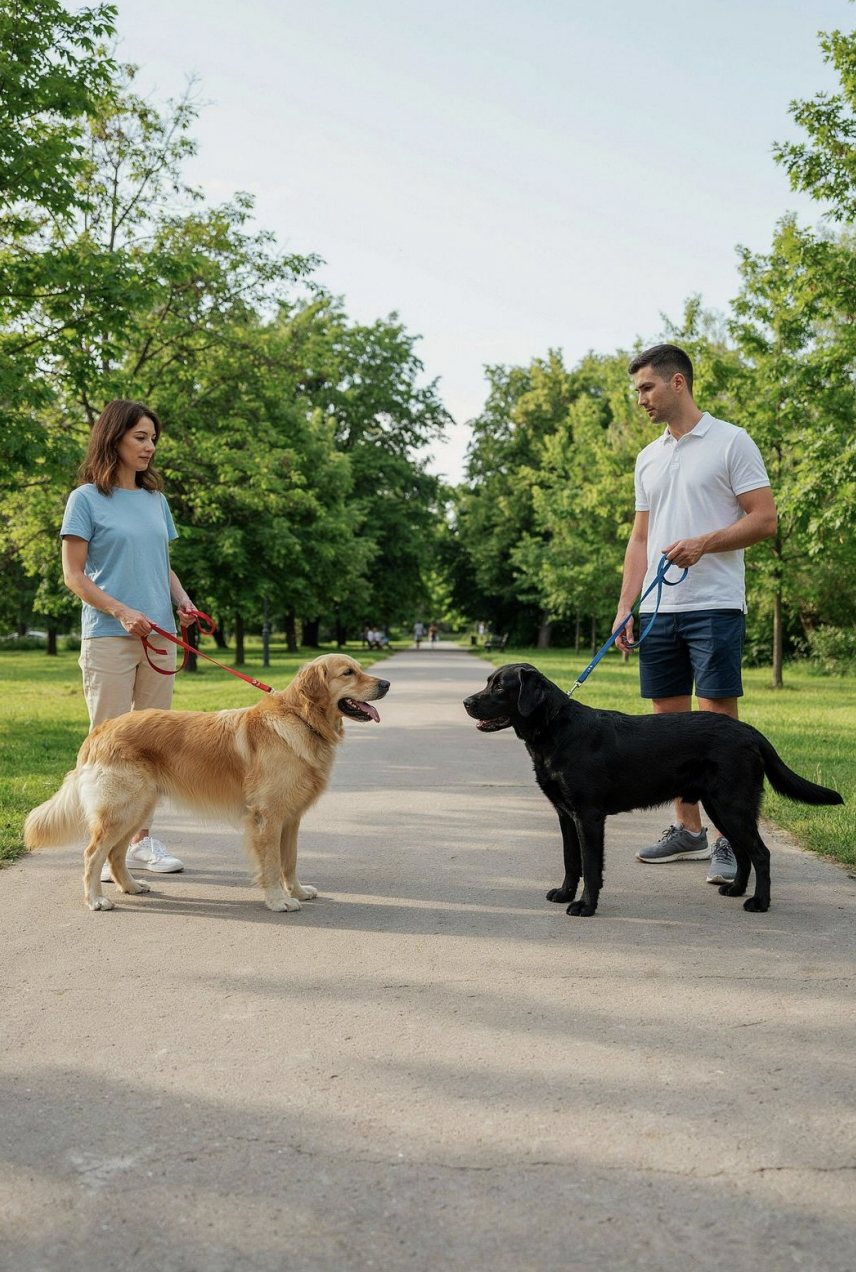
Intense, unblinking focus on a trigger — sometimes with the body leaning forward — often precedes lunging or barking by only a second or two.
7. Repeated lip licking or yawning out of context
Licking lips or yawning when there's no food nearby and your dog isn't tired are common, often-overlooked signs of stress.
Why this matters more than it seems
Catching any of these signs early gives you options: add distance, redirect your dog's attention, or simply pause — well before your dog feels like barking or lunging is their only choice. Over time, many owners find that managing these early moments well does more for a calmer walk than anything that happens after a reaction has already started.
This article is educational information, not a diagnosis. If your dog has a bite history or the reactivity involves serious aggression, speak with a vet or a qualified, force-free behaviour professional.
The guide
A full chapter on body language
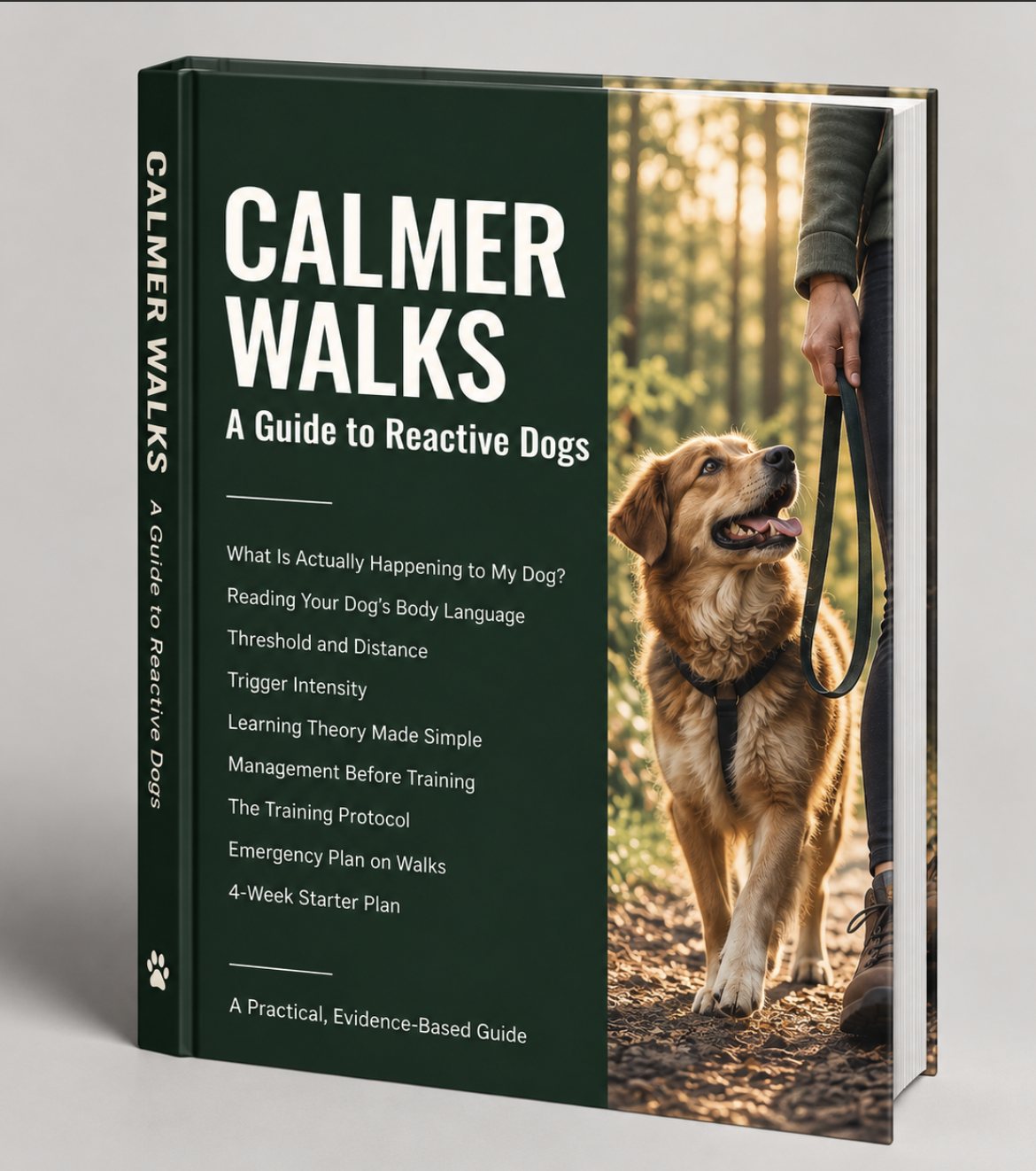
Calmer Walks includes a dedicated chapter on reading your dog's body language, plus the threshold and distance work that turns early warning signs into real prevention.
Explore the Guide