What Does "Threshold" Mean for a Reactive Dog?
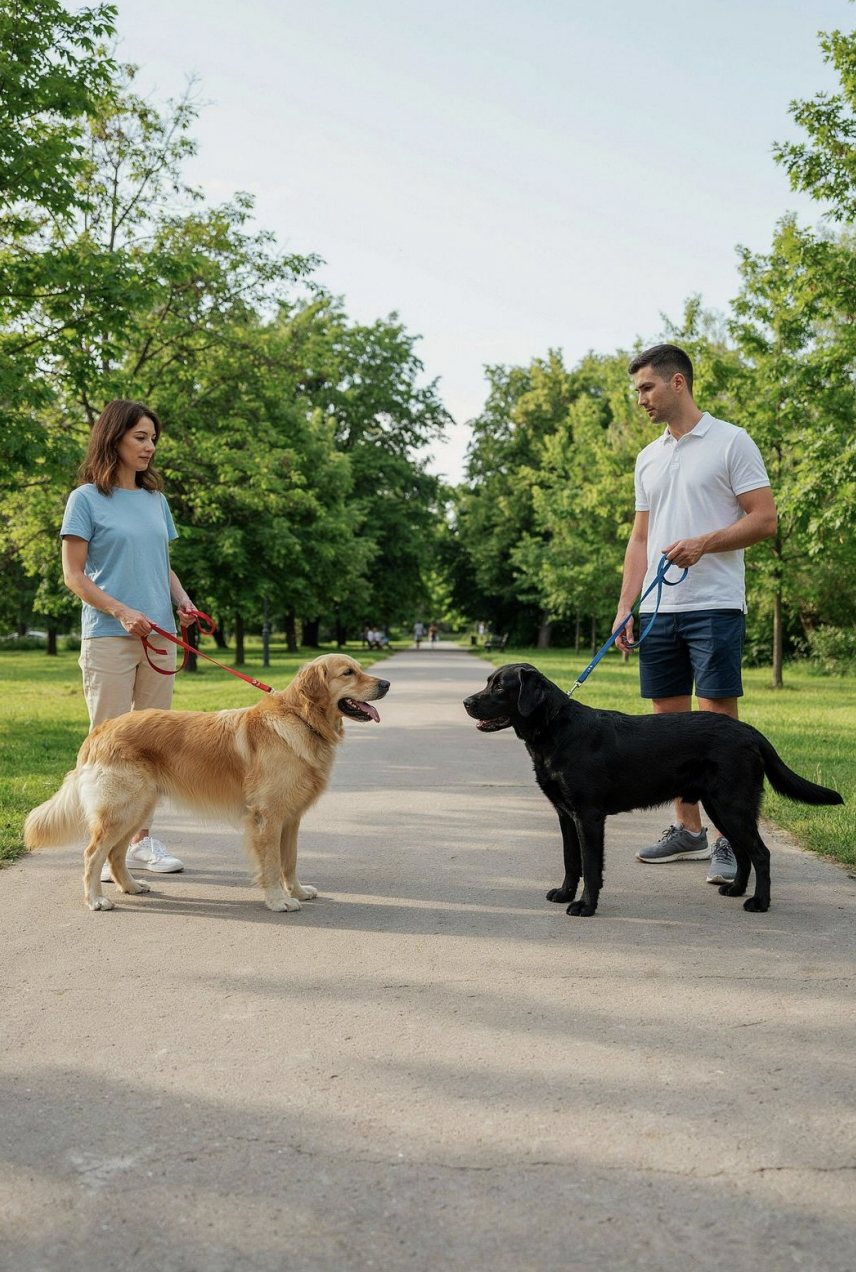
If you've read anything about reactive dogs, you've probably run into the word "threshold." It's one of the most useful ideas in this whole topic — and one of the most commonly misunderstood.
A simple definition
Threshold is the point at which your dog stops being able to think clearly and starts reacting on instinct. Below threshold, your dog can notice a trigger, take treats, respond to cues, and make choices. Over threshold, none of that is reliably available to them — they're in survival mode, not learning mode.
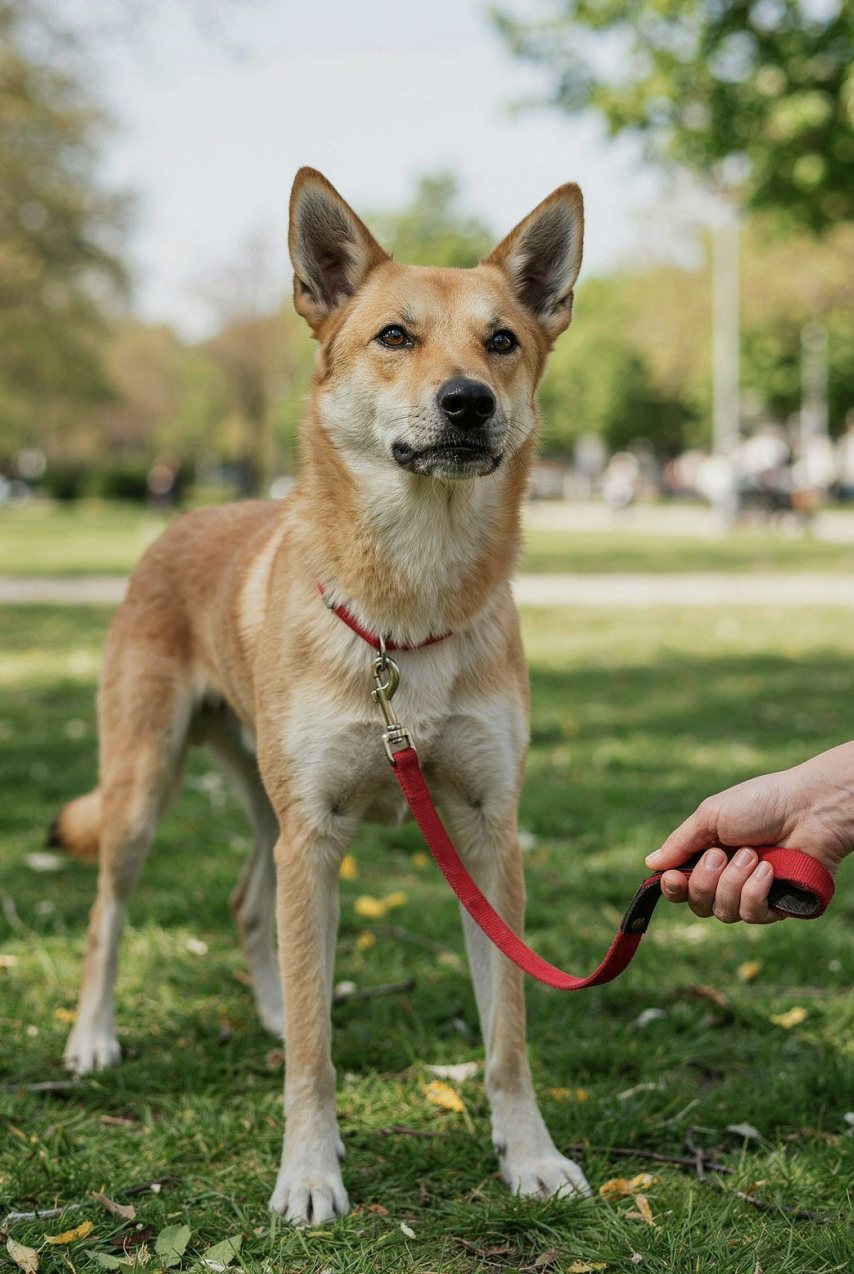
Three rough zones to think in: comfortable and aware, alert but still able to engage with you, and over threshold and reacting. The goal of most training exercises is to work right at the edge of the second zone — close enough to notice the trigger, far enough to stay thinking.
Distance is the most common lever — but not the only one
Increasing distance from a trigger is usually the fastest way to bring a dog back under threshold, which is why it's the tool most owners reach for first. But distance isn't the whole story. How fast a trigger is moving, whether it's approaching directly, how long it stays in view, and how many things are happening at once all affect how "big" a trigger feels to your dog — sometimes more than raw distance does.
Why working under threshold matters
Training and counterconditioning — pairing a trigger with something good — only works if your dog is in a state where they can actually process what's happening. Above threshold, a dog isn't in a position to learn a new, calmer association; they're just getting through the moment. That's why "flooding" a dog with a trigger up close, hoping they'll "get used to it," so often makes things worse instead of better.
Finding your dog's working distance
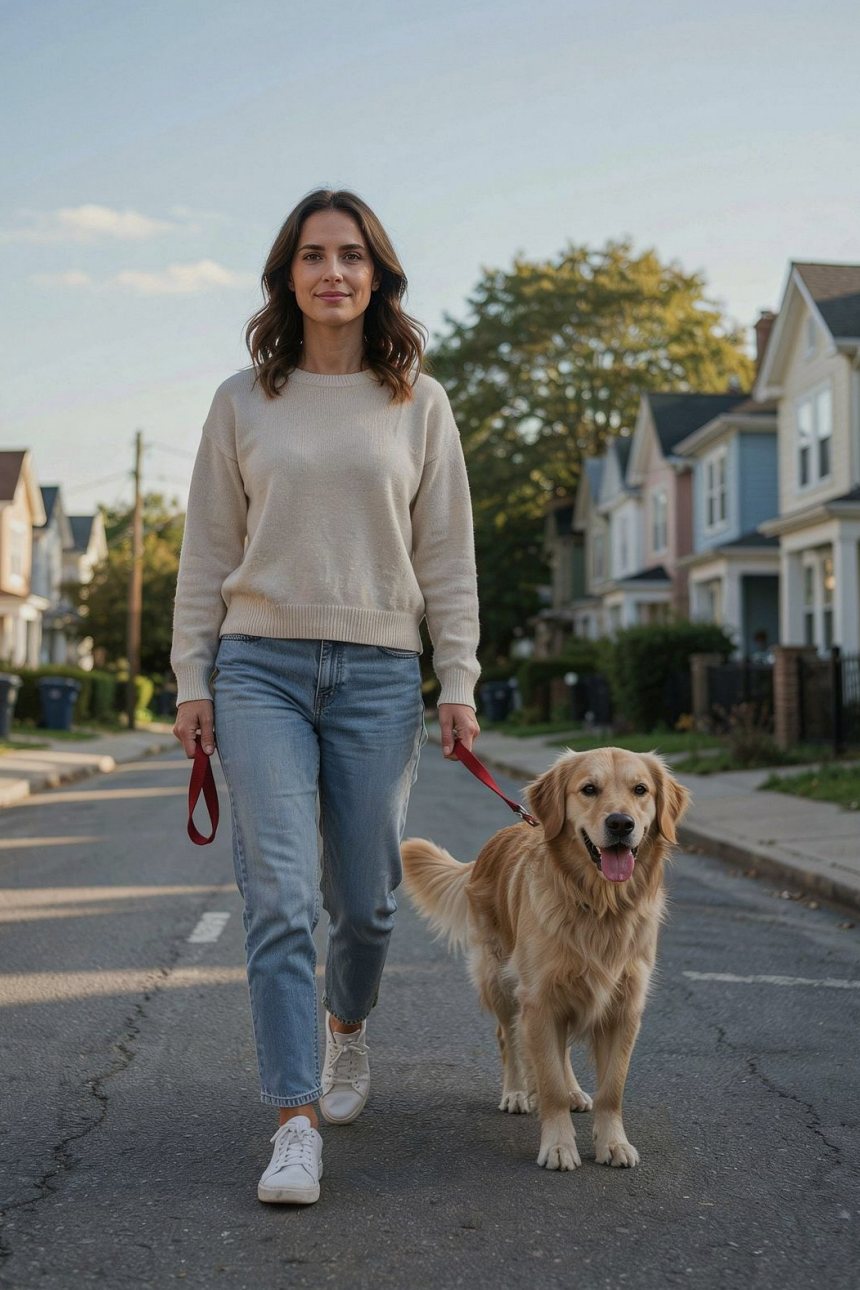
Every dog's threshold is different, and it changes day to day depending on stress, energy, and what's already happened on that walk. A practical starting point: find a distance from a typical trigger where your dog notices it but can still look back at you, take a treat, and move on. That's your working distance for the day — and it's normal for it to shift.
This article is educational information, not a diagnosis. If your dog has a bite history or the reactivity involves serious aggression, speak with a vet or a qualified, force-free behaviour professional.
The guide
Threshold, mapped out in full
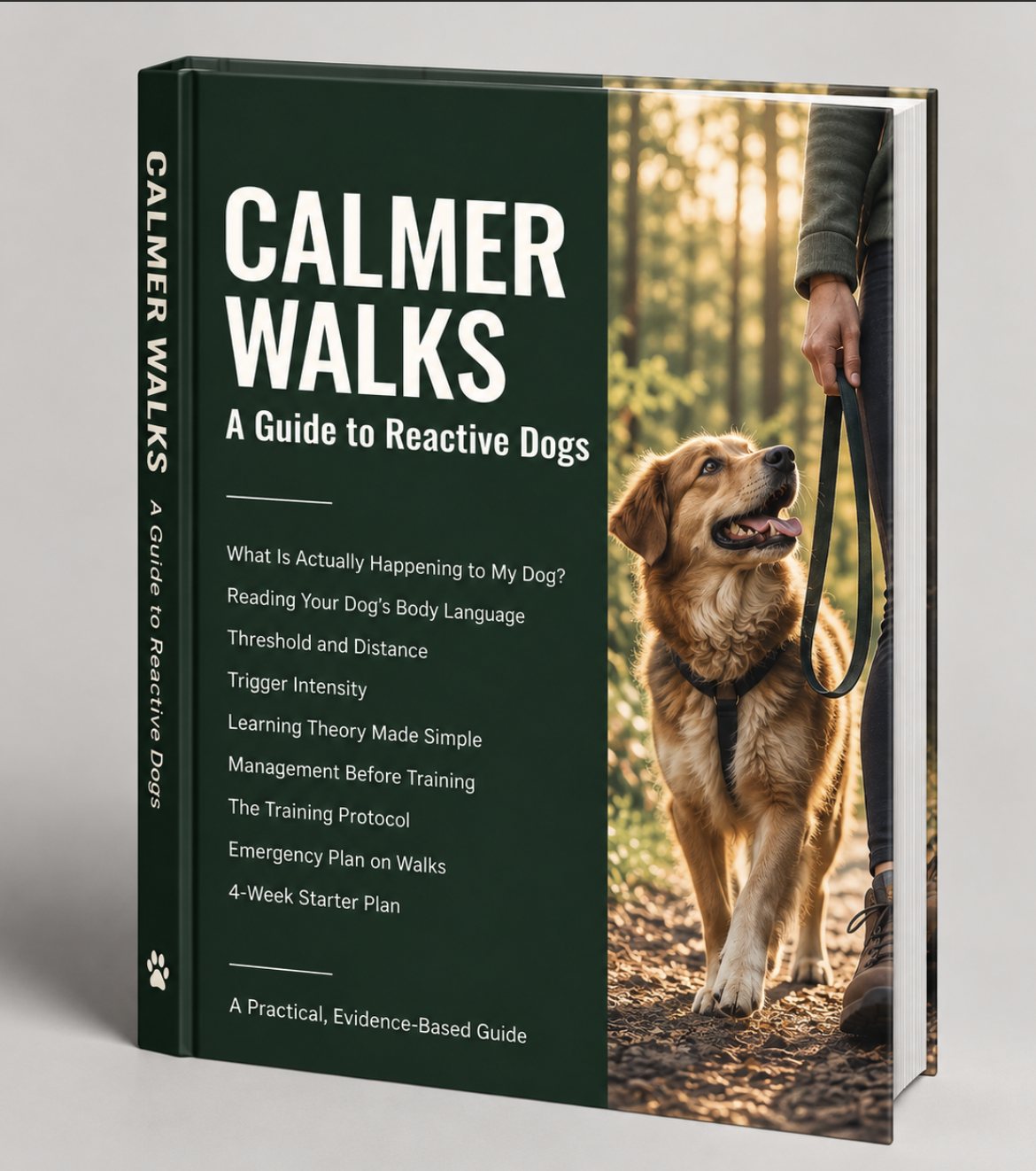
Calmer Walks dedicates a full chapter to threshold and distance, plus trigger intensity, a training protocol, and an emergency plan for the walks that don't go as planned.
Explore the Guide